If you are travelling to a distant location, you know it will be an exciting trip. It’s always amazing to leave your home and discover new things. No matter if you go camping or just visit new places, there’s something adventurous to look forward to. But before you start your journey, you have to check which services and equipment you may need to live comfortably and safely outdoors. If you have an electric vehicle, you have to plan to make sure it will run it smoothly over long distances. This is where a deep cycle gel battery will prove a handy investment.

Showing all 15 resultsSorted by price: low to high

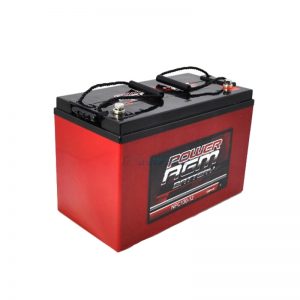




An AGM battery (Absorbent Glass Mat) is the most popular deep-cycle battery for Australian 4WD, caravan and camping setups — and for good reason. AGM batteries are sealed, spill-proof, maintenance-free and built to handle the deep discharge and recharge cycles that powering a fridge, lights and accessories demands. Unlike a standard flooded lead-acid battery, a deep-cycle AGM is engineered to be regularly discharged and recharged hundreds of times without damaging the cells.
At All 12 Volt, we stock a range of AGM deep-cycle batteries sized for every setup — from compact 80Ah units for weekend warriors to heavy-duty 200Ah batteries for full-time caravanners. Every battery we carry has been selected for Australian conditions: heat, vibration, corrugated tracks and the kind of real-world punishment that kills cheap batteries fast.
AGM stands for Absorbent Glass Mat — a technology where the electrolyte (sulphuric acid) is absorbed into fibreglass mat separators between the lead plates, rather than sitting as a free liquid. This design gives AGM batteries several key advantages over traditional flooded lead-acid batteries:
| Battery Type | Designed For | Deep Discharge Safe? | Cycle Life | Use In Dual Battery? |
|---|---|---|---|---|
| AGM Deep Cycle | Accessories, camping, off-grid power | ✅ Yes — to 50% | 300–500+ cycles | ✅ Yes — ideal choice |
| AGM Starter | Engine cranking only | ❌ No — damages cells | Low if deep discharged | ❌ Not recommended |
| Standard Flooded Lead-Acid | General purpose / starter | ⚠️ Limited | 100–200 cycles | ⚠️ Poor choice for aux |
| Lithium LiFePO4 | Off-grid, extended touring | ✅ Yes — to 80–90% | 2,000–3,000+ cycles | ✅ Yes — premium option |
The key rule with AGM deep-cycle batteries: never discharge below 50% of capacity. Discharging an AGM below 50% (known as “deep discharging”) dramatically reduces cycle life. A 100Ah AGM battery should be treated as a 50Ah usable battery in practice.
Battery capacity is measured in amp-hours (Ah). The higher the Ah rating, the more energy the battery can store and the longer it will run your accessories between charges. Use this guide to find the right size for your setup:
| Use Case | Recommended Capacity | Typical Runtime (fridge only) |
|---|---|---|
| Day trips, basic lighting and USB charging | 60–80Ah AGM | 12–16 hours |
| Weekend camping, 40–50L fridge, LED lights | 100Ah AGM | 20–24 hours |
| Long weekends, fridge + inverter (occasional) | 120Ah AGM | 24–30 hours |
| Week-long trips, fridge running 24/7 | 150–200Ah AGM | 36–48+ hours |
| Caravan or extended off-grid (consider lithium) | 200Ah AGM or lithium upgrade | 48+ hours |
How to calculate what you need: Add up the amp draw of everything you’ll run (check product labels or specifications), multiply by the hours you’ll run them per day, then double it to stay above the 50% discharge limit. For example: a 40L fridge drawing 4A average over 24 hours = 96Ah consumed — meaning you need at least a 120Ah AGM to stay above 50%.
If you’re deciding between AGM and lithium for your auxiliary battery, here’s the honest comparison:
| AGM Deep Cycle | Lithium LiFePO4 | |
|---|---|---|
| Usable capacity | ~50% (100Ah = 50Ah usable) | ~80–90% (100Ah = 80–90Ah usable) |
| Weight (100Ah) | 28–32 kg | 12–14 kg |
| Cycle life | 300–500 cycles | 2,000–3,000+ cycles |
| Charge speed | Moderate — requires absorption stage | Fast — accepts high current charge |
| Works in cold temps | ✅ Yes (reduced performance below 0°C) | ⚠️ Some lithium won’t charge below 0°C |
| Upfront cost (100Ah) | $180–$350 | $700–$1,400+ |
| Long-term cost per cycle | Higher | Lower |
| Best for | Budget setups, weekend trips, first dual battery build | Extended touring, caravans, weight-sensitive builds |
AGM is the right choice if you’re building your first dual battery system, doing mainly weekend trips, or working within a tight budget. The upfront cost is significantly lower and a quality AGM battery from a reputable brand will last 3–5 years with proper care. If you’re spending weeks at a time off-grid or want to reduce weight in a caravan, lithium is worth the investment.
One of the most common mistakes that kills AGM batteries prematurely is using the wrong charger. AGM batteries require a multi-stage smart charger — not a simple trickle charger and not a basic VSR connected directly to an alternator.
When charging from your vehicle’s alternator while driving, a DC-DC charger delivers this full multi-stage profile correctly. A basic VSR or direct connection will not — it simply connects the batteries together at alternator voltage, which typically undercharges an AGM and causes sulphation over time.
For charging at home or camp via a power point, use a dedicated AGM-compatible smart charger rated for the battery’s capacity (a 10% charge rate is the general guideline — so a 10A charger for a 100Ah battery).
A quality AGM battery treated correctly will last 3–5 years even in harsh Australian conditions. Follow these guidelines to get the most from yours:
With over 30 years of experience in 12V electrical systems, the team at All 12 Volt can help you choose the right AGM battery for your vehicle and use case — and install it properly if needed. We carry AGM batteries in a range of capacities and can pair them with the right DC-DC charger and accessories to build a complete dual battery system that works first time, every time.
Our Gregory Hills workshop services customers across Camden, Campbelltown, Liverpool, Picton and the greater Macarthur region. Book an installation → or contact us for advice →
AGM stands for Absorbent Glass Mat. It refers to the fibreglass mat separators between the lead plates that absorb the electrolyte, making the battery sealed, spill-proof and maintenance-free. AGM is a type of lead-acid battery, but significantly more advanced and better suited to deep-cycle use than standard flooded lead-acid batteries.
A deep-cycle battery is any battery designed to be regularly discharged to a significant portion of its capacity and then recharged — as opposed to a starter battery, which delivers a short high-current burst to start an engine. AGM is a construction technology. Most auxiliary batteries used in 4WD and caravan setups are AGM deep-cycle batteries — meaning they combine the AGM sealed construction with a deep-cycle plate design built for repeated discharge and recharge cycles.
A quality AGM deep-cycle battery used correctly will last 3–5 years or 300–500 charge cycles. “Used correctly” means never discharging below 50%, always recharging with a compatible multi-stage charger, and storing it fully charged when not in use. Poor charging practices — particularly leaving it partially discharged — are the most common cause of premature AGM battery failure.
You need a smart multi-stage charger with an AGM setting. A basic trickle charger or an older single-stage charger will not apply the correct absorption stage and can overcharge or undercharge the battery over time, reducing its lifespan. When charging from a vehicle alternator while driving, use a DC-DC charger with an AGM charging profile — not a VSR or direct connection.
The recommended maximum depth of discharge for an AGM deep-cycle battery is 50%. So a 100Ah AGM battery has approximately 50Ah of usable capacity. Regularly discharging below 50% significantly shortens cycle life. If you need more usable capacity without going deeper into the battery, step up to a larger Ah rating or consider upgrading to a lithium battery, which can be safely discharged to 80–90%.
A modern 40–50L compressor fridge draws approximately 3–5A on average when cycling normally. Over 24 hours that’s roughly 40–60Ah consumed. To stay above the 50% discharge limit, you need at least a 100Ah AGM battery to run a fridge for 24 hours. For longer trips without driving to recharge, a 120–150Ah AGM — or a solar panel connected via an MPPT regulator — is recommended.
Most AGM deep-cycle batteries can be mounted upright or on their side, but not upside down. Because the electrolyte is absorbed into the glass mat rather than sitting as a free liquid, there is no risk of spills. Always check the specifications for your specific battery model, as mounting orientation requirements vary between manufacturers.

Who does not love the outdoors and camping? It's a great adventure and opens up new destinations and often unexplored places. But you need to be well equipped with the safe and durable caravan and camping accessories for these outdoor activities. It is undoubtedly thrilling and exciting, but unless you take good care of what you need to do and what you should avoid, there's always a chance of an unpleasant experience. It pays to take sound advice from a 4WD specialist when going on a camping trip.