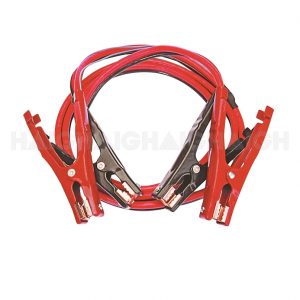
Never get stuck with a flat battery again – our range of jump starter packs at All 12 Volt are compact, powerful, and easy to use. Designed for cars, 4WDs, trucks, and marine applications, they provide reliable emergency power wherever you go.

Showing all 3 resultsSorted by price: low to high
A jump starter pack is one of the most important pieces of recovery gear you can carry in a 4WD, ute or caravan — and one of the most overlooked. A flat battery in the middle of nowhere, hours from the nearest town, isn’t just an inconvenience. Without another vehicle nearby and a set of jumper cables, it can mean a very long wait for help. A portable jump starter pack means you never need to rely on a passing stranger to get moving again.
Modern lithium jump starter packs are compact enough to fit in a glove box, powerful enough to start a large diesel 4WD engine, and versatile enough to charge your phone, run USB accessories and even inflate a tyre — all from a single device. At All 12 Volt, we stock jump starter packs suited to everything from small petrol engines to heavy-duty diesel 4WDs and trucks, from brands tested to perform in Australian conditions.
| Portable Jump Starter Pack | Traditional Jumper Cables | |
|---|---|---|
| Needs another vehicle | ✅ No — fully self-contained | ❌ Yes — useless without a donor car |
| Works when alone | ✅ Yes | ❌ No |
| Safe for modern vehicles | ✅ Yes — reverse polarity protection | ⚠️ Risk of damage if connected wrong |
| USB charging / power bank | ✅ Most models | ❌ No |
| Built-in torch / LED light | ✅ Most models | ❌ No |
| Air compressor (some models) | ✅ Combo units available | ❌ No |
| Size and portability | Pocket to shoebox size | Bulky cables, needs storage |
| Price | $80–$500+ | $15–$60 |
Jumper cables have their place — they’re a cheap backup and work well when another vehicle is available. But for anyone who spends time off-road, in remote areas or simply values not being stranded, a quality jump starter pack is non-negotiable kit. It’s the one piece of gear you hope you never need and will be very glad you have.
Jump starter packs come in two main types: lithium (lithium-ion) and lead-acid. Lithium has largely replaced lead-acid for portable jump starters — here’s why:
| Lithium Jump Starter | Lead-Acid Jump Starter | |
|---|---|---|
| Size and weight | Compact — pocket to small brick size | Bulky — similar to a small car battery |
| Weight (typical) | 0.5–1.5 kg | 4–10 kg |
| Peak amps | 400A–3,000A+ | 400A–1,000A |
| Self-discharge (storage) | Low — holds charge for 6–12 months | High — needs regular top-up charging |
| Charge time | 1–3 hours via USB-C or DC | 4–12+ hours via mains charger |
| Works as USB power bank | ✅ Yes | ❌ No |
| Performance in cold | ⚠️ Reduced below 0°C (warm it up first) | ✅ More consistent in cold |
| Price | $80–$400+ | $100–$300+ |
| Best for | 4WD, camping, everyday carry, portability | Workshop use, very cold climates, trucks |
For the vast majority of Australian 4WD owners and campers, a lithium jump starter pack is the right choice. The weight saving alone is significant — a quality lithium pack that starts a 3.0L diesel 4WD weighs under 1 kg and fits in a jacket pocket. The same job from a lead-acid unit requires a unit the size and weight of a small lunchbox.
The two most important specifications to match to your vehicle are peak amps and engine compatibility.
Peak amps (also listed as peak current) is the maximum burst of current the jump starter delivers during cranking. More cylinders and larger displacement means a higher cranking requirement — particularly for diesel engines, which have much higher compression ratios than petrol engines.
| Engine Type | Recommended Peak Amps | Examples |
|---|---|---|
| Small petrol (up to 2.0L) | 400–600A | Small hatchbacks, motorbikes, ATVs |
| Medium petrol (2.0–3.5L) | 600–1,000A | SUVs, dual-cab utes (petrol), most passenger cars |
| Large petrol / small diesel (up to 3.0L diesel) | 1,000–1,500A | Toyota HiLux, Isuzu D-Max, Ford Ranger (diesel), V8 petrol |
| Large diesel 4WD (3.0L–4.5L) | 1,500–2,000A | Toyota LandCruiser 70/200 Series, Nissan Patrol GU/Y62, RAM 1500 |
| Trucks, buses, large diesel plant | 2,000A+ | Heavy commercial vehicles, generators |
Important: always size up, not down. A jump starter rated exactly at your engine’s minimum may struggle on a very cold morning or when the battery is severely discharged. For diesel 4WDs — particularly large-displacement engines like the 4.5L V8 diesel LandCruiser — choose a pack rated for at least 1,500–2,000A peak.
Modern lithium jump starters are designed to be simple and safe to use — most include smart clamp cables that prevent connection in the wrong order. Follow these steps every time:
Note: if the flat battery is physically damaged (cracked case, leaking, swollen), do not attempt to jump start the vehicle. A damaged battery can be a fire and explosion risk.
A jump starter pack you pull out in an emergency must work first time. Keep it ready with these simple habits:
A jump starter pack is a portable battery unit that delivers a high-current burst to a vehicle’s flat battery — enough to crank the engine and start the vehicle. It connects to the battery terminals via clamp cables included with the unit. Unlike traditional jumper cables, a jump starter pack is self-contained and doesn’t require a second vehicle. Modern lithium jump starters include safety electronics that detect correct connection, prevent reverse polarity damage and regulate the current delivered.
Yes — but you need the right pack for the job. Diesel engines have much higher compression ratios than petrol engines and require significantly more cranking current to start. For a common diesel 4WD like a Toyota HiLux, Ford Ranger or Isuzu D-Max (2.8L–3.0L diesel), a pack rated at 1,000–1,500A peak is recommended. For a large-displacement diesel like the Toyota LandCruiser 4.5L V8 diesel or Nissan Patrol 4.2L, go to 1,500–2,000A. Always check the pack’s stated engine compatibility before purchasing.
A quality lithium jump starter pack will hold its charge for 6–12 months in storage without being used — much better than lead-acid units, which need topping up every 30–60 days. In terms of jump starts per charge, most mid-range packs will deliver 20–40 jump starts from a full charge before needing to be recharged. Recharging takes 1–3 hours via USB-C or a DC input cable.
Yes — most lithium jump starter packs include one or more USB-A or USB-C outputs and can charge phones, tablets, cameras, torches and other USB-powered devices. This makes them a genuinely useful everyday carry item, not just an emergency tool. Using the USB output regularly also means the pack gets charged and used regularly, keeping the cells healthy.
Yes, when used correctly with a quality pack that includes reverse polarity protection and short circuit protection. The main risk with older-style jumper cables and cheaper units is incorrect connection order or a short circuit, which can damage sensitive vehicle electronics. Quality jump starter packs include smart clamp cables that alert you to incorrect connection and prevent current flow until the clamps are connected safely.
A flat battery that jump starts successfully and then holds charge after a 20–30 minute drive is typically a battery that was simply discharged — perhaps from leaving lights on or a prolonged period without driving. The battery itself may be fine. However, if a battery goes flat repeatedly with normal use, or won’t hold charge after being jump started and driven, it needs replacing. Jump starting a battery that keeps going flat is a temporary fix, not a solution. See our AGM batteries for replacement deep-cycle options.
Peak amps is the maximum instantaneous current the jump starter can deliver — measured at the very beginning of the crank when demand is highest. Cranking amps (CA) or cold cranking amps (CCA) is a more sustained measurement reflecting what the unit delivers over several seconds. Peak amps are often cited in marketing because they sound impressive, but cranking amps are a more meaningful real-world figure. When comparing jump starters, look at both — a pack with high peak amps but low cranking amps may struggle to start a large engine if it drops off quickly.

Who does not love the outdoors and camping? It's a great adventure and opens up new destinations and often unexplored places. But you need to be well equipped with the safe and durable caravan and camping accessories for these outdoor activities. It is undoubtedly thrilling and exciting, but unless you take good care of what you need to do and what you should avoid, there's always a chance of an unpleasant experience. It pays to take sound advice from a 4WD specialist when going on a camping trip.