 Are You Looking For A Dual Battery System?
Dual battery systems can be helpful in many ways. For example, if you are thinking of a portable dual battery system for your vehicle, it will prove very beneficial. When you’re running an electric vehicle and travel long distances, this battery system will work the best for you. The risks involved with lithium dual battery systems are also minimal. If you like to use your electric vehicle for long-distance travel and camping, investing in this battery system will be one of the best things you can do.
Showing all 15 resultsSorted by price: low to high


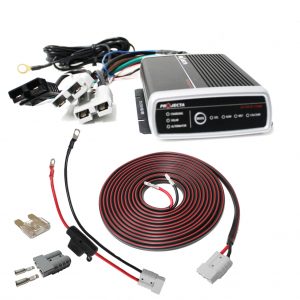


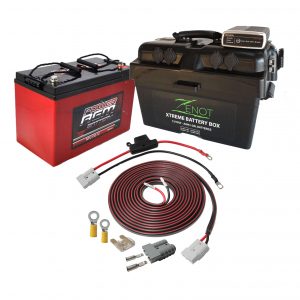


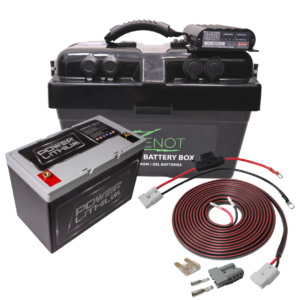


A dual battery system is the foundation of any serious 4WD, caravan or off-grid camping setup. It gives you a dedicated auxiliary battery to run your fridge, lights, inverter and 12V accessories — completely independent of your starter battery — so you never risk being stranded with a flat engine battery at camp.
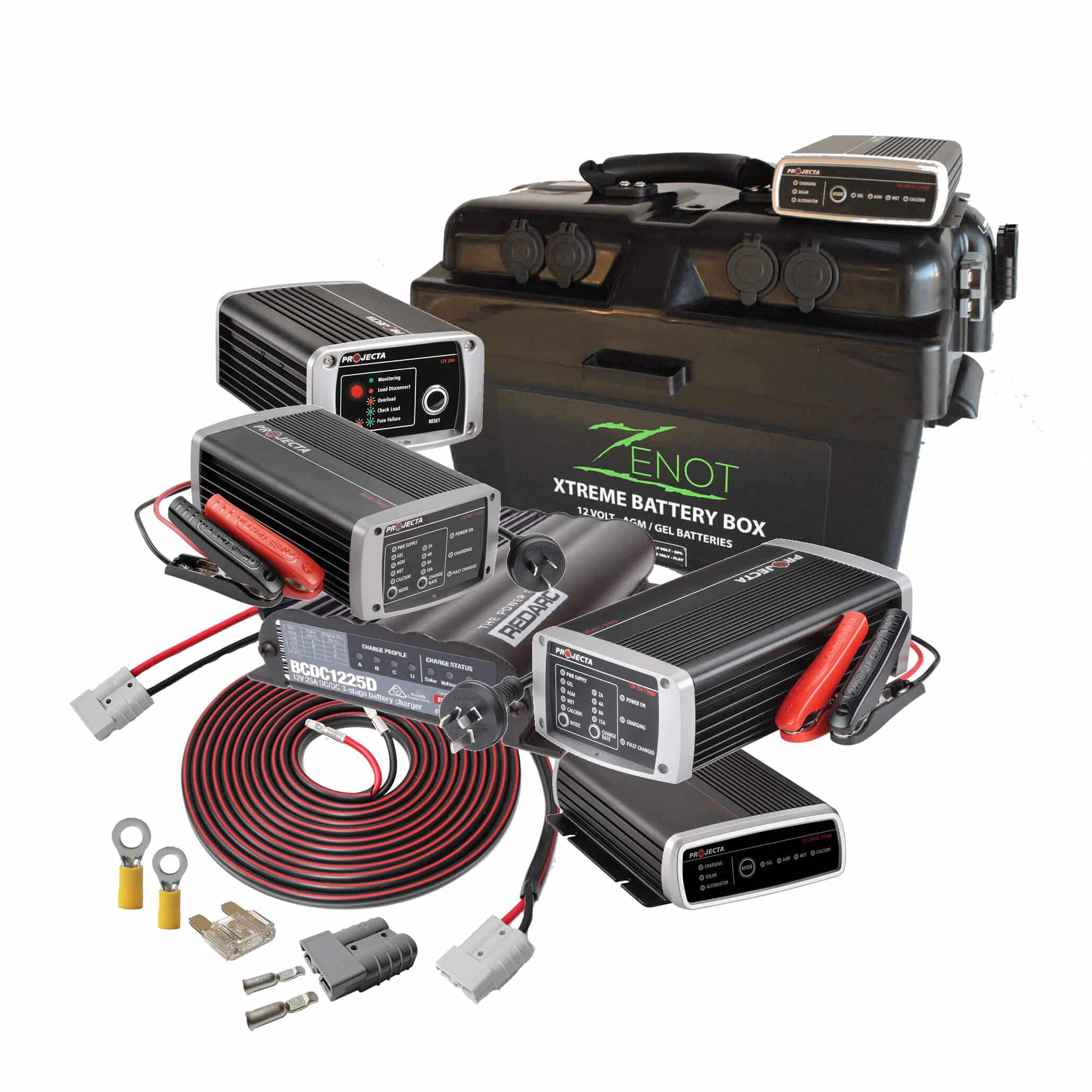
At All 12 Volt, we’ve been building and installing dual battery systems for over 30 years. Whether you’re fitting out a Ford Ranger, Toyota HiLux, Isuzu D-Max, caravan or camper trailer, we stock everything you need: deep-cycle batteries, DC-DC chargers, battery boxes, Anderson plugs, isolators, wiring kits and complete dual battery packages.
A dual battery system uses two separate batteries in your vehicle:
The two batteries are connected through an isolator — either a DC-DC charger or a voltage sensing relay (VSR) — which charges the auxiliary battery from the alternator while you drive, then disconnects it when the engine is off so your starter battery stays protected.
| Feature | Dual Battery System | Single Battery |
|---|---|---|
| Run fridge overnight safely | ✅ Yes | ❌ Risks flat starter battery |
| Engine always starts in the morning | ✅ Yes — batteries isolated | ❌ Not guaranteed |
| Powers high-draw accessories | ✅ Yes | ⚠️ Limited |
| Works with solar charging | ✅ Yes | ⚠️ Not recommended |
| Peace of mind off-grid | ✅ Yes | ❌ No |
The auxiliary battery is the heart of your dual battery system. The two most common types for 4WD and caravan setups in Australia are AGM and lithium (LiFePO4).
| AGM Deep Cycle | Lithium LiFePO4 | |
|---|---|---|
| Usable capacity | ~50% (don’t discharge below 50%) | ~80–90% (much more usable power) |
| Weight (100Ah example) | ~28–32 kg | ~12–14 kg |
| Cycle life | 300–500 cycles | 2,000–3,000+ cycles |
| Charge speed | Slower — needs absorption stage | Faster — accepts higher charge current |
| Price (100Ah) | $180–$350 | $700–$1,400+ |
| Requires specific charger | AGM-compatible DC-DC charger | Lithium-specific charging mode essential |
| Best for | Budget-conscious setups, weekend trips | Extended touring, caravans, heavy loads |
At All 12 Volt, we’ve installed hundreds of dual battery systems across Sydney and the Macarthur region. For most weekend campers and 4WD enthusiasts, a quality 100Ah AGM battery with a 25A DC-DC charger is the ideal starting point. If you’re spending weeks at a time off-grid, or running a large fridge plus a CPAP or inverter, step up to a 120Ah–200Ah lithium system.
The right battery size depends on what you’re running and for how long between charges. Use this table as a starting guide:
| Setup / Use Case | Recommended Capacity | Battery Type |
|---|---|---|
| Weekend camping, basic accessories, LED lights | 80–100Ah | AGM |
| 12V fridge (40–50L), lights, phone charging | 100–120Ah | AGM or Lithium |
| 12V fridge + 240V inverter (occasional) | 120–150Ah | AGM or Lithium |
| Extended touring, large fridge, CPAP, lighting | 150–200Ah+ | Lithium |
| Caravan with solar, full off-grid setup | 200Ah+ (often twin battery bank) | Lithium |
Tip: A 40–50L fridge draws approximately 3–5A per hour when cycling. Over 24 hours that’s roughly 40–60Ah. Factor in at least 30% extra capacity as a safety buffer — so a 100Ah AGM battery comfortably runs a fridge for 24 hours without dropping below 50% charge.
A complete dual battery setup typically includes these core components:
This is the most common question we get at All 12 Volt. The short answer: if your vehicle was made after 2015, you need a DC-DC charger, not a VSR.
Modern vehicles use smart alternators that reduce their output voltage once the starter battery is detected as full. A VSR interprets this as “charging finished” and disconnects your auxiliary battery — sometimes within 5 minutes of starting. A DC-DC charger actively pulls a controlled current regardless of the alternator’s output, so your auxiliary battery charges properly every drive.
Not sure where to start, or want the job done properly the first time? Our Gregory Hills workshop installs complete dual battery systems, DC-DC chargers, Anderson plugs, solar setups and full 12V electrical systems for 4WDs, utes, caravans and campervans.
We service customers across Camden, Campbelltown, Liverpool, Picton and the greater Macarthur region. Every installation comes with a labour warranty and is wired to Australian standards.
Book a dual battery installation → or contact us for a quote →
A dual battery system uses a second (auxiliary) deep-cycle battery to power your camping and 12V accessories independently from your vehicle’s starter battery. While you drive, an isolator — either a DC-DC charger or VSR — charges the auxiliary battery from the alternator. When the engine is off, the two batteries are separated so your starter battery is never drained by accessories.
A basic dual battery system with a 100Ah AGM battery, 25A DC-DC charger, battery box and Anderson plug typically costs $500–$900 in parts. A lithium setup with a 120Ah battery and DC-DC charger will be $1,200–$2,000+. Professional installation at All 12 Volt is additional — contact us for a quote based on your vehicle and requirements.
For any vehicle made after 2015 — including the Ford Ranger, Toyota HiLux, Isuzu D-Max, Mitsubishi Triton and most modern dual-cab utes — a DC-DC charger is essential. Smart alternators in these vehicles reduce their output when the starter battery appears full, which causes a VSR to disconnect the auxiliary battery prematurely. A DC-DC charger bypasses this and ensures proper charging every time.
Yes — and it’s one of the best upgrades you can make for extended touring. You can add solar via a standalone MPPT solar regulator, or choose a DC-DC charger with a built-in MPPT input (a combo unit). A 200W solar panel combined with a good DC-DC charger will keep a 100Ah battery topped up during the day even without driving, giving you true off-grid capability.
A 100Ah AGM battery will run a modern 40–50L 12V fridge for approximately 20–28 hours before dropping to 50% charge (the recommended minimum for AGM). A 100Ah lithium battery delivers nearly double the usable capacity, running the same fridge for 36–48 hours. Adding solar extends this indefinitely on sunny days.
A confident DIYer with basic auto electrical knowledge can install a dual battery system. However, for modern vehicles with smart alternators, complex wiring runs, or integrated solar and inverter setups, professional installation is the safer and more reliable option. All 12 Volt offers professional installation from our Gregory Hills workshop — contact us to discuss your setup.

Who does not love the outdoors and camping? It's a great adventure and opens up new destinations and often unexplored places. But you need to be well equipped with the safe and durable caravan and camping accessories for these outdoor activities. It is undoubtedly thrilling and exciting, but unless you take good care of what you need to do and what you should avoid, there's always a chance of an unpleasant experience. It pays to take sound advice from a 4WD specialist when going on a camping trip.